 In 1986, Mattel was riding high on the massive success of Masters of the Universe. But by 1987, Mattel reported an incredible $127 million drop in domestic sales, mostly blamed on the decline of MOTU. There were probably a few reasons for this, ranging from tough competition from the Transformers and G.I. Joe to the lack of any media support–there hadn’t been a new episode of the cartoon in two years, and the comics were sparse and mediocre at best, unlike those of the Transformers or G.I. Joe.
But perhaps the biggest problem, as Jerry Oppenheimer suggests in his tell-all history of Mattel, Toy Monster, was that Mattel had become “too confident and too aggressive and too greedy in pushing the product to retailers to increase profits and impress Wall Street.” As Roger Sweet noted in his book, the product was “way oversold, and in 1987 it collapsed […] There was just too much product put in the stores for the amount of demand for it. It swamped the shelves.”* One can assume the much-maligned 1987 feature film that August was the final nail in the coffin.
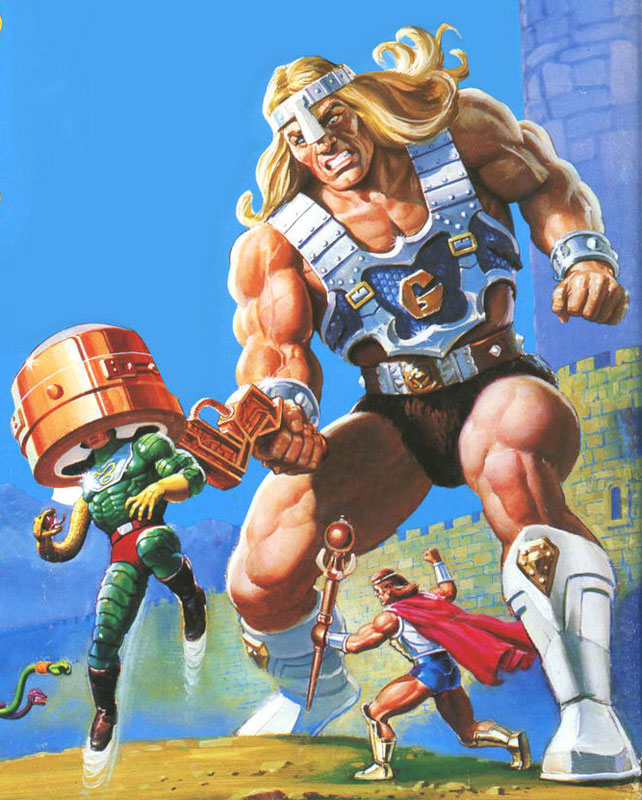
It’s a shame that MOTU died when it did, because in some ways 1987 was the most creative period in MOTU since its inception. With the end of the cartoon and its somewhat limited storytelling scope, Mattel’s designers were able to return to MOTU’s “anything goes” roots and create a new storyline. Called “The Powers of Grayskull,” this sub-brand offered a new, prehistoric setting, a new cast of characters led by He-Ro, “the Most Powerful Wizard in the Universe,” and featured that perennial kids’ favorite, dinosaurs. Sadly, only the dinosaurs–Bionatops, Turbodactyl and my personal favorite, Tyrantisaurus–ever made it to U.S. stores. The rest of the line, including an immense sauropod called Gigantisaur and two “giants,” Tytus and Megator, never appeared here in the States. Curiously, however, both Tytus and Megator did appear in stores in Italy, making them two of the most valuable MOTU collectibles in existence. (more…)